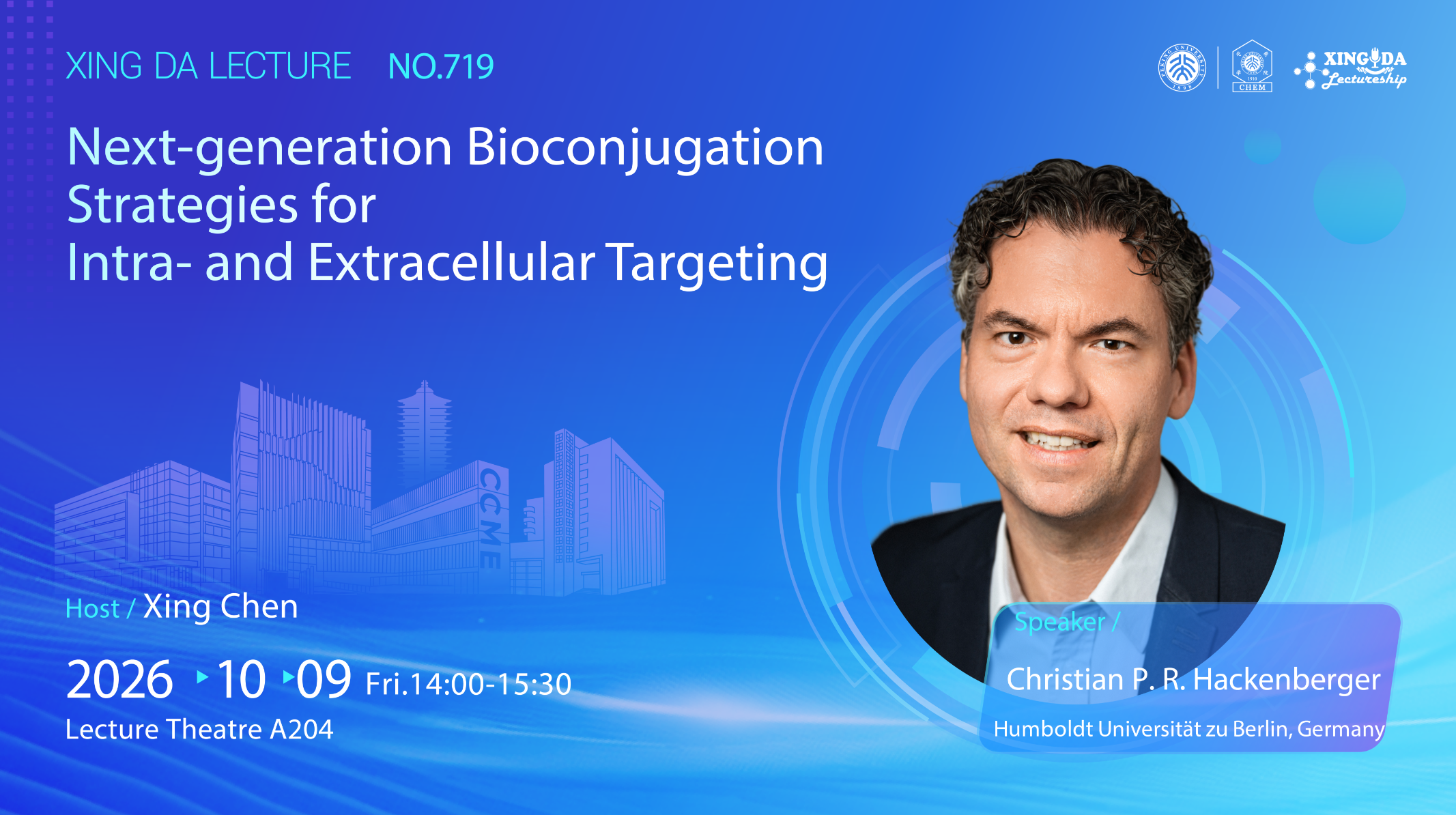
Abstract
Our lab aims to identify highly selective chemical reactions for the synthesis, modification and targeting of functional peptides and proteins. We apply such chemoselective or bioorthogonal reactions to study cellular function or to engineer novel bioconjugates for targeted drug delivery.
In this presentation, l will showcase the development of Cys-selective unsaturated phosphorus-based electrophiles including phosphonamidates, phosphonothiolates, phosphinates and phosphine oxides. We applied these reactions in the so-called P5-labeling protocol for the generation of new antibody-drug conjugates (ADCs), for which we show an improved efficacy compared to clinically approved cancer therapeutics. Moreover, I will introduce unsaturated phosphorus compounds as new covalent probes for important biological and pharmacological targets.
Furthermore, I will highlight the intracellular delivery of functional proteins and antibodies. To achieve this, we employ cyclic or linear cell-penetrating peptides (CPPs) to enhance the non-endosomal cellular uptake, either as protein-conjugates or in form of cell-surface bound CPP-additives. Examples include the non-endosomal translocation of cell-permeable nanobodies to allow the visualization of intracellular targets, the identification of interaction partners or the reconstitution of misfolded proteins inside to illustrate their potential as next-generation biopharmaceuticals.
Biography
Christian Hackenberger studied chemistry in Freiburg and Madison/Wisconsin and performed his doctoral studies at the RTWH Aachen. After a postdoctoral stay at MIT, he founded his own research group at the Freie Universität Berlin in 2005. In 2012, he was appointed as Leibniz-Humboldt Professor and Department Head for Chemical Biology at the Leibniz-Research Institute for Molecular Pharmacology (FMP Berlin) and the Humboldt Universität zu Berlin. He is an associate editor for Chemical Science, the flagship journal of the RSC and authored over 150 publications.
His group develops highly selective chemical and chemoenzymatic strategies to functionalize proteins and antibodies to generate protein-based therapeutics against cancer, Alzheimer and viral infections. His laboratory invented P5-labeling, a superior bioconjugation platform to generate stable and efficacious antibody-drug-conjugates (ADCs), which are currently in clinical trials. In addition, he pioneered the development of cell-permeable nanobodies and antibodies for intracellular targeting, the engineering of structurally defined protein-based antiviral compounds and the application of photocatalytic proximity labeling techniques for intracellular interactome analysis.
Christian was a co-founder of the Munich-based company Tubulis, which engineers better tolerable cancer drugs, especially ADCs, using conjugation technologies from his lab, in particular the P5-labeling platform. Recent awards include the Leonidas Zervas Award from the European Peptide Society (2018), the Astra Zeneca Award from the Royal Society of Chemistry (2023), the Max-Bergmann Medal (2024) and the UCB-Ehrlich Award of the EFMC (2026). In 2020, he was the first recipient of the Falling Walls breakthrough of the year award in the Life Sciences, recognizing his contributions to develop next-generation biopharmaceuticals.



 北大化学微信