报告摘要
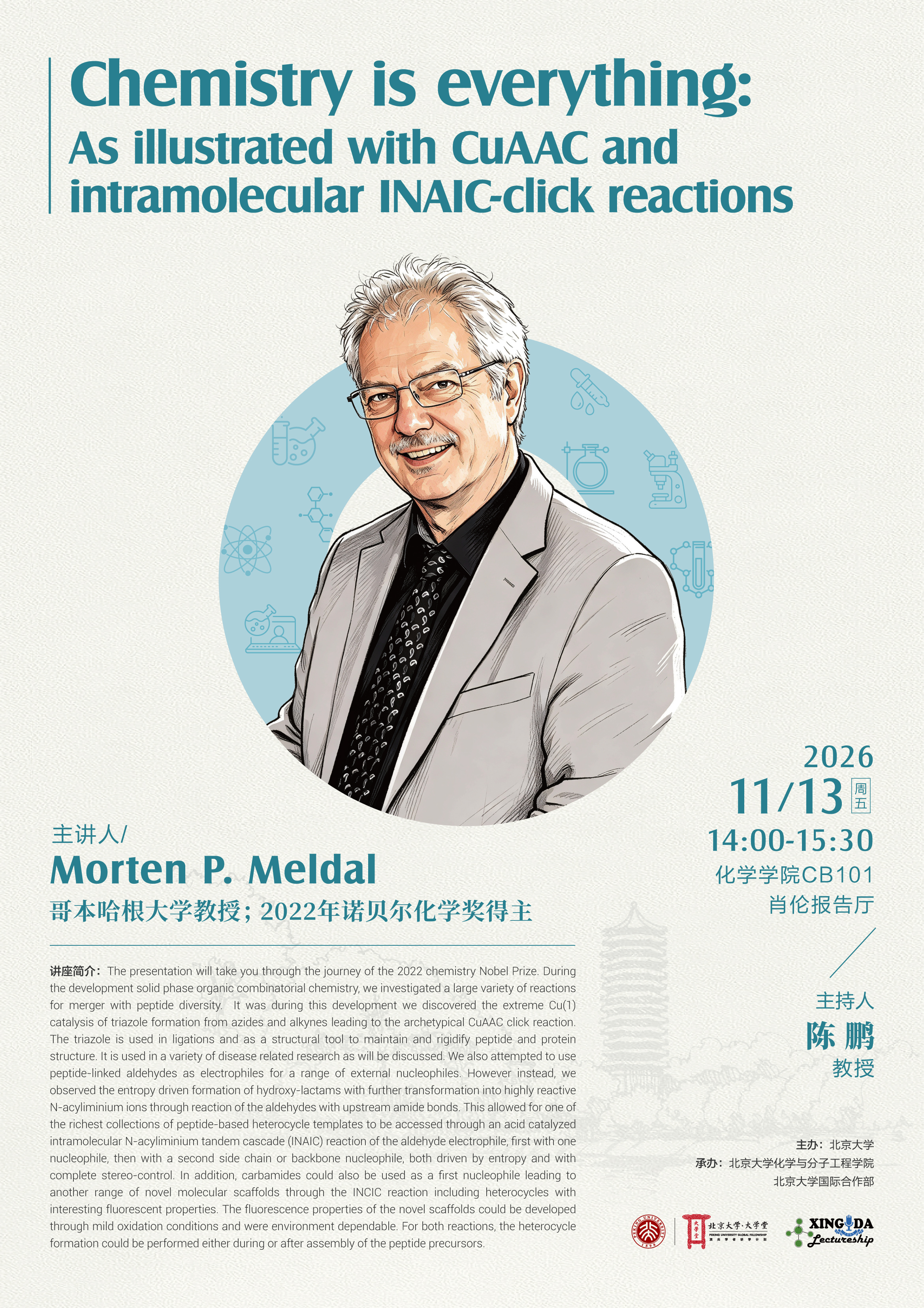
The presentation will take you through the journey of the 2022 chemistry Nobel Prize. During the development solid phase organic combinatorial chemistry, we investigated a large variety of reactions for merger with peptide diversity. It was during this development we discovered the extreme Cu(1) catalysis of triazole formation from azides and alkynes leading to the archetypical CuAAC click reaction. The triazole is used in ligations and as a structural tool to maintain and rigidify peptide and protein structure. It is used in a variety of disease related research as will be discussed. We also attempted to use peptide-linked aldehydes as electrophiles for a range of external nucleophiles. However instead, we observed the entropy driven formation of hydroxy-lactams with further transformation into highly reactive N-acyliminium ions through reaction of the aldehydes with upstream amide bonds. This allowed for one of the richest collections of peptide-based heterocycle templates to be accessed through an acid catalyzed intramolecular N-acyliminium tandem cascade (INAIC) reaction of the aldehyde electrophile, first with one nucleophile, then with a second side chain or backbone nucleophile, both driven by entropy and with complete stereo-control.1 In addition, carbamides could also be used as a first nucleophile leading to another range of novel molecular scaffolds through the INCIC reaction including heterocycles with interesting fluorescent properties.2 The fluorescence properties of the novel scaffolds could be developed through mild oxidation conditions and were environment dependable. For both reactions, the heterocycle formation could be performed either during or after assembly of the peptide precursors.



 北大化学微信